

Titanium Damascus
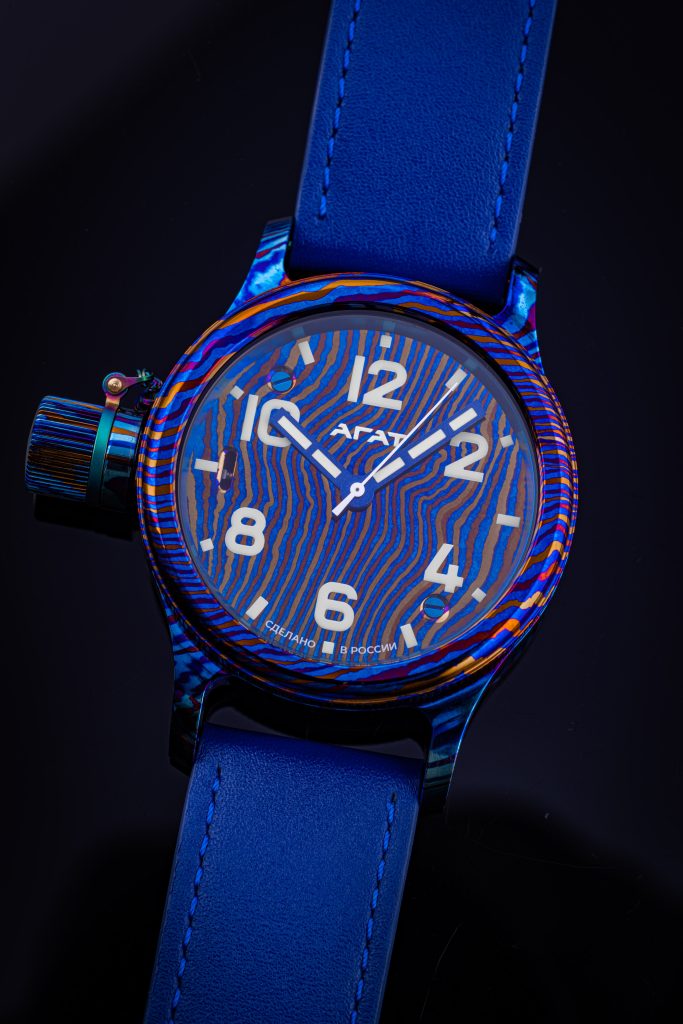
As soon as titanium became available for practical use, its exceptional properties drew attention. It is almost twice as light as iron yet stronger than many grades of steel. Titanium also forms alloys that can significantly improve the properties of other metals. Its applications continue to expand.
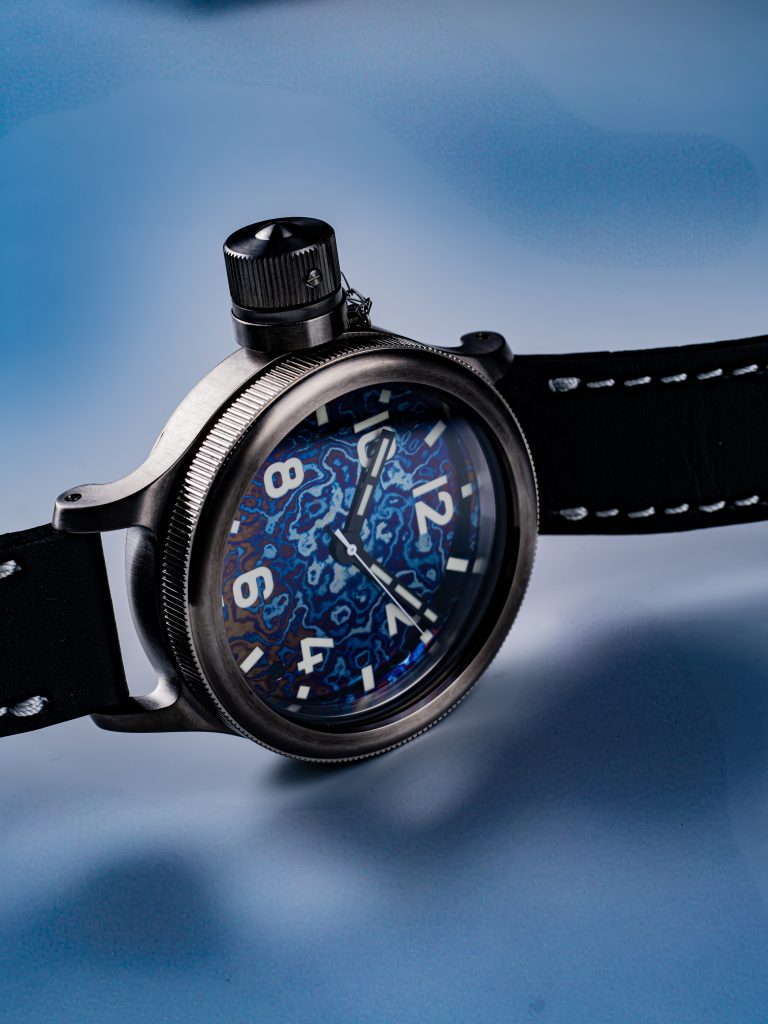
Titanium also attracted the attention of Zlatoust craftsmen. The result was a watch with a titanium Damascus case. At the Zlatoust Watch Factory, Damascus techniques are applied not only to steel. The factory first successfully produced mokume-gane from brass, copper and nickel silver, creating a distinctive wood-grain pattern. It then developed titanium and titanium-zirconium alloys forge-welded in a Damascus-style process.
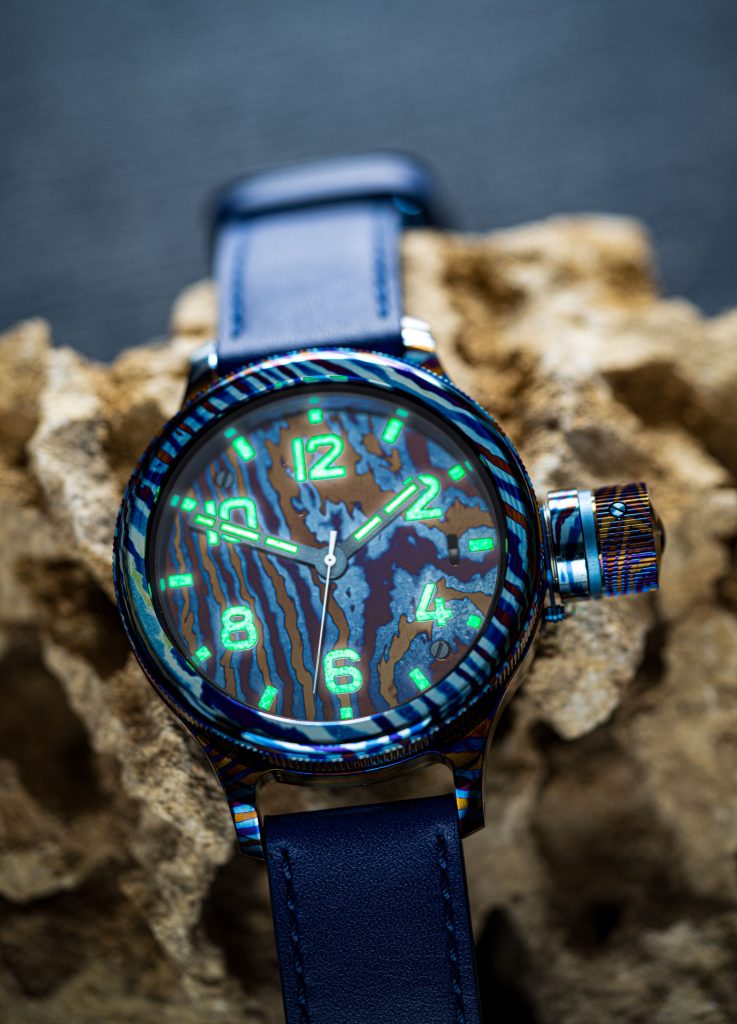
Like Damascus steel, titanium Damascus begins with layers — but here the material is titanium alloys with varying compositions. The layers are heated and repeatedly forge-welded until they form a single billet. A case is then machined from the billet and carefully polished.
After precise heat treatment, the individual layers react differently. Depending on the titanium content and alloying elements, they reveal their own colours — from pale yellow and orange-red to violet — within the characteristic flowing Damascus pattern.
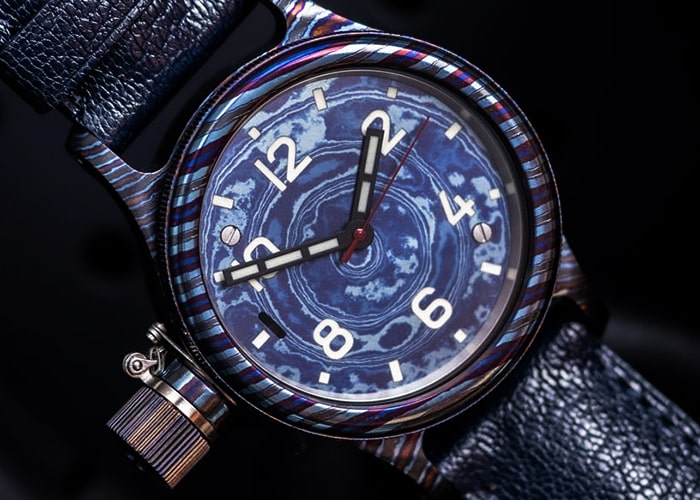
Adding zirconium creates an even richer palette, but makes the process more complex. Zirconium must be handled with particular care because it is highly reactive at high temperatures. The result is remarkable: an unusually light watch for the characteristic Zlatoust scale. Titanium is one of the lightest structural metals, which is why it is widely used in aerospace.

The factory produces not only cases but also dials from titanium and titanium-zirconium Damascus. Each dial is a thin plate with a flowing, unrepeatable pattern. Because the process cannot be programmed to produce an identical outcome, every piece is genuinely one of a kind.